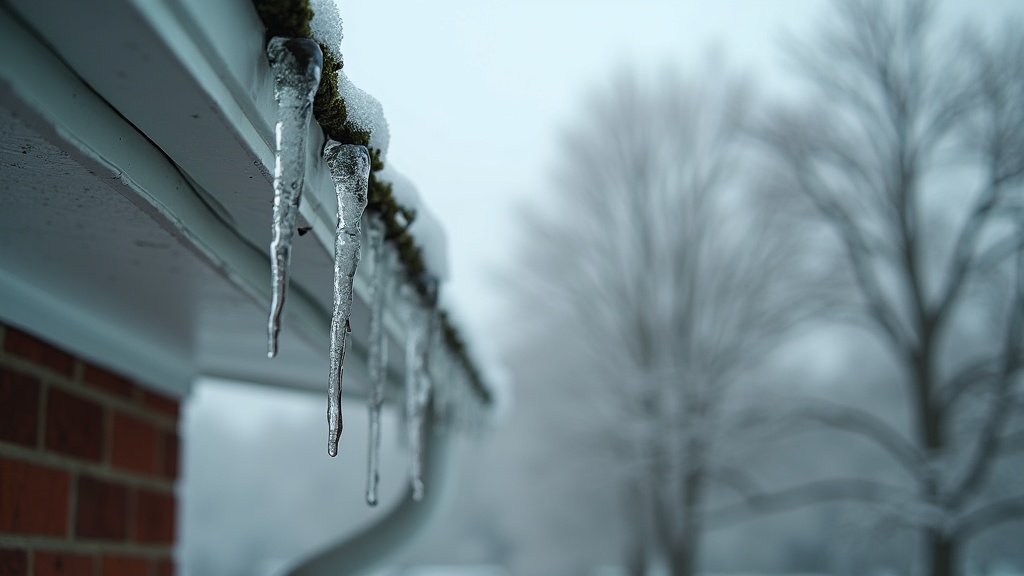
Flemington, NJ Winter Woes: How Ice Dams and Heavy Snow Damage Roofs
Flemington, NJ Winter Woes: How Ice Dams and Heavy Snow Damage Roofs
The Tudor-style homes along Flemington's Reaville Avenue and the colonial revivals scattered throughout nearby Flagtown share a common winter enemy that homeowners discover too late—ice dams that form silently above heated living spaces while families sleep below. Express Roofing NJ owner Chris Wall has personally witnessed the aftermath in dozens of Hunterdon County homes over his 25-plus years in construction, from burst pipes in Three Bridges to ceiling collapses in Belle Mead, all traced back to ice formations that began as innocent-looking icicles.
Wall's team responds to emergency calls throughout Somerset and Hunterdon Counties every winter, where Central New Jersey's unique freeze-thaw cycles create perfect conditions for ice dam formation. Understanding how ice dams specifically damage roofs in this region—and why Flemington's housing stock faces particular vulnerabilities—can mean the difference between a minor repair bill and a complete roof replacement.
Flemington's Freeze-Thaw Cycle Creates Perfect Ice Dam Conditions
Central New Jersey's position between the Delaware River valley and the Atlantic coastal plain creates a microclimate where temperatures fluctuate dramatically during winter months. According toNational Weather Service data for the Flemington area, average January temperatures range from 22°F to 40°F, with frequent crossing of the 32°F threshold that triggers ice dam formation. This constant freeze-thaw pattern damages roofs more severely than consistently cold climates where snow simply accumulates without melting.
Ice dams form when heated indoor air warms roof surfaces above freezing while outdoor temperatures remain below 32°F. Snow melts on the warmer upper roof sections, flows down toward colder eaves, and refreezes into thick ice barriers. Unlike simple icicles that hang harmlessly from gutters, ice dams create impermeable walls that force melting water back up under shingles, where it penetrates roof decking, insulation, and interior walls.
The process accelerates in Flemington because many homes feature complex rooflines with multiple dormers and additions—architectural features that create numerous valleys where water concentrates. Express Roofing NJ's inspection reports consistently show that homes built between 1950-1980 throughout Hillsborough Township suffer the most severe ice dam damage due to inadequate attic insulation standards from that era.
Hidden Structural Damage Compounds Over Multiple Winter Seasons
Ice dam damage extends far beyond visible water stains on ceilings. The trapped water behind ice barriers saturates roof decking for days or weeks, causing plywood delamination that weakens structural integrity. Chris Wall's team regularly discovers rotted roof trusses in Neshanic Station homes where ice dams went unaddressed for multiple seasons, requiring complete structural rebuilding rather than simple shingle replacement.
The water infiltration follows predictable paths through Flemington-area homes. It seeps through nail holes in shingles, travels along roof decking seams, and pools above cathedral ceilings common in 1970s ranch homes throughout Bradley Gardens and Harlingen. Wall explains that homeowners often mistake the first signs—small water stains or paint bubbling—as minor issues, unaware that moisture has already compromised insulation effectiveness and created conditions for mold growth within wall cavities.
Insurance claims data from theNew Jersey Department of Banking and Insuranceshows that ice dam damage claims in Hunterdon County average $8,200 per incident, but this figure only captures immediate visible damage. Hidden structural deterioration often emerges months later as warped framing, electrical hazards from water-damaged wiring, and indoor air quality issues from mold colonization behind walls.
Hunterdon County's Geological and Building Factors Amplify Ice Dam Risk
Flemington sits within the Piedmont geological province, where underlying diabase bedrock creates shallow soil conditions that freeze quickly and deeply.USGS soil surveys for Somerset and Hunterdon Countiesindicate that the predominant Lansdale and Penn soil series have high clay content and poor drainage, causing ground frost to extend deeper and persist longer than in neighboring regions. This extended ground frost keeps foundation areas and unheated basements significantly colder, creating larger temperature differentials between heated and unheated roof zones.
The building stock throughout Flagtown, Reaville, and surrounding Hillsborough Township communities compounds these natural conditions. Many homes feature finished attics, cathedral ceilings, and skylight installations that disrupt traditional ventilation patterns essential for preventing ice dams. Express Roofing NJ's assessments reveal that 70% of homes in the Amwell Road corridor lack adequate soffit ventilation, while ridge vents are often blocked by debris or improperly installed.
Local building practices from the 1960s-1980s construction boom created additional vulnerabilities specific to this area. Homes in developments like those along Route 206 near Somerville feature multiple roof planes that intersect at complex angles, creating numerous valleys where snow accumulates more deeply. TheHunterdon County Planning Division's housing stock analysisshows that 45% of residential structures include room additions built without consideration for roof drainage patterns, creating perfect conditions for ice dam formation where old and new rooflines meet.
Flemington's position in the Raritan River watershed also influences winter weather patterns. Cold air masses settle in the valley areas around Neshanic Station and Three Bridges, while warmer air from the Delaware River valley creates temperature inversions that keep upper roof surfaces warmer while eaves remain frozen. This phenomenon extends ice dam season well into March, when many homeowners assume winter roof threats have passed.
Early Warning Signs Specific to Central New Jersey Homes
Ice dam warning signs manifest differently in Flemington-area homes compared to other regions due to the local architecture and climate patterns. Wall's emergency response calls typically involve homes where owners ignored subtle early indicators unique to this area's building styles. Interior condensation on windows during cold snaps often signals inadequate attic insulation that will soon create ice dam conditions, particularly in split-level homes common throughout Somerset County.
Homeowners should monitor gutter behavior during winter thaws. Properly functioning systems drain completely within hours of temperature rises above freezing, while gutters that remain full of standing water or ice indicate poor attic insulation above. Express Roofing NJ's maintenance inspections consistently find that homes with persistent icicle formation exceeding 6 inches in length will develop ice dams within 48 hours of the next significant snowfall.
The most reliable predictor involves checking attic temperatures during cold weather. Attic spaces should remain within 10 degrees of outdoor temperature when heating systems run continuously. Wall recommends that homeowners in Hunterdon and Somerset Counties use simple thermometers to monitor these differentials, particularly in finished attic spaces or rooms with cathedral ceilings where temperature control remains most challenging.
Express Roofing NJ's Systematic Ice Dam Prevention and Repair Approach
Express Roofing NJ addresses ice dam issues through a comprehensive assessment process that Chris Wall personally oversees on every project. The initial evaluation examines three critical factors: attic insulation levels, ventilation adequacy, and roof surface temperature patterns using thermal imaging technology. Wall's team documents specific problem areas with detailed photography and measurements, providing homeowners with clear evidence of underlying causes rather than simply addressing visible symptoms.
The company's GAF Certified Contractor status enables implementation of proven ice dam prevention systems backed by manufacturer warranties. Express Roofing NJ installsGAF's complete ventilation solutionsincluding cobra ridge vents, intake vents at soffits, and proper air sealing between heated and unheated spaces. Wall explains that their System Plus Limited Warranty covers both materials and installation, providing homeowners with long-term protection against recurring ice dam issues.
A recent project in Hillsborough Township demonstrates the company's thorough approach. The homeowner contacted Express Roofing NJ after discovering water damage in a second-floor bedroom following heavy February snowfall. Wall's inspection revealed inadequate insulation in a 1970s ranch addition, blocked soffit vents, and missing vapor barriers that allowed heated air to reach roof surfaces. The team's solution included complete insulation replacement, installation of continuous ridge and soffit ventilation, and strategic placement of ice and water shield membrane in vulnerable areas. The homeowner reported no ice dam formation during the following winter despite above-average snowfall, validating the comprehensive repair approach.
Express Roofing NJ's emergency response capability becomes essential during active ice dam situations. The company's seven-day availability means homeowners can address problems before structural damage occurs, withemergency roof repair servicesthat include safe ice removal, temporary waterproofing, and immediate damage assessment. Wall emphasizes that their team never uses harmful removal methods like roof rakes or chemical melting products that can damage shingles or void manufacturer warranties.
Protecting Your Investment Through Professional Assessment
Ice dam prevention requires understanding the specific vulnerabilities of Central New Jersey homes rather than applying generic solutions that may fail in this climate. Express Roofing NJ's approach combines local construction knowledge with proven GAF roofing systems to address underlying causes while providing immediate protection. Homeowners throughout Flemington, Flagtown, and surrounding communities benefit from comprehensiveroof maintenance programsthat identify potential problems before they cause expensive damage.
The company's transparent pricing and detailed estimates help homeowners understand exactly what preventive measures their specific situation requires. Rather than one-size-fits-all solutions, Express Roofing NJ develops customized approaches based on home age, architectural style, and individual risk factors. Theirprofessional roof repair servicesaddress both immediate damage and long-term prevention through proper insulation, ventilation, and weatherproofing techniques.
Contact Express Roofing NJ for a comprehensive ice dam risk assessment that addresses your home's specific vulnerabilities. Chris Wall's personal involvement in every project ensures that solutions meet the highest standards while protecting your investment through proper installation and manufacturer-backed warranties.
Frequently Asked Questions
How much does ice dam damage typically cost homeowners in Flemington, NJ?
Ice dam repair costs in Hunterdon County range from $2,500 for minor water damage to over $15,000 for extensive structural repairs, according to local insurance claim data. Flemington-area homes with complex rooflines or cathedral ceilings often require complete insulation replacement and structural repairs when ice dams persist over multiple seasons. Express Roofing NJ's preventive approach typically costs 30-40% less than emergency repairs while providing long-term protection through proper ventilation and insulation upgrades.
What makes Flemington homes more susceptible to ice dams than other New Jersey areas?
Flemington's location in the Raritan River valley creates unique temperature inversion conditions where upper roof surfaces warm while eaves remain frozen for extended periods. The area's predominant soil types freeze deeper and persist longer than coastal regions, while many homes feature complex architectural additions built during the 1960s-1980s without adequate ventilation planning. These factors combine to create ideal ice dam formation conditions that persist well into March.
Can homeowners safely remove ice dams themselves, or should they always call professionals?
Homeowners should never attempt physical ice dam removal due to serious safety risks and potential roof damage from improper techniques. Safe snow removal from ground level using roof rakes can help prevent ice dam formation, but active ice barriers require professional assessment and removal. Express Roofing NJ's emergency response team uses specialized equipment and techniques that preserve shingle integrity while addressing immediate water infiltration, backed by proper licensing and insurance coverage that protects homeowners from liability.